The 'Holy Gasp' of Psalm 8
I'm not sure Psalm 8 is a soft, wedding-day psalm but a psalm of awe, astonishment and surprise.
Last week I attended a service where we had a reflection based on Psalm 8.

I had a rather unfiltered, unthought through moment with Margie, (who had remembered it was read at our wedding), that instead of it being a soft, wedding-day psalm it was a psalm of awe, astonishment and surprise, particularly verses 3 and 4:

Psalm 8:3–4 (NRSVue):
3 When I look at your heavens, the work of your fingers,
the moon and the stars that you have established;
4 what are humans that you are mindful of them,
mortals that you care for them?
That question what are we? It can mean very different things based on how 'we' is said:
- What are we? Said in a question for our selves
- What are we? Said in a statement of curiosity and possibly doubt?
As part of a series of events taking place in The Western Dales Mission Community last week, Methodist Minister Rev Professor David Wilkinson gave a lecture titled Is there room for God in cosmology?
The lecture was recorded, and I highly recommend a listen:
 Andy Burgess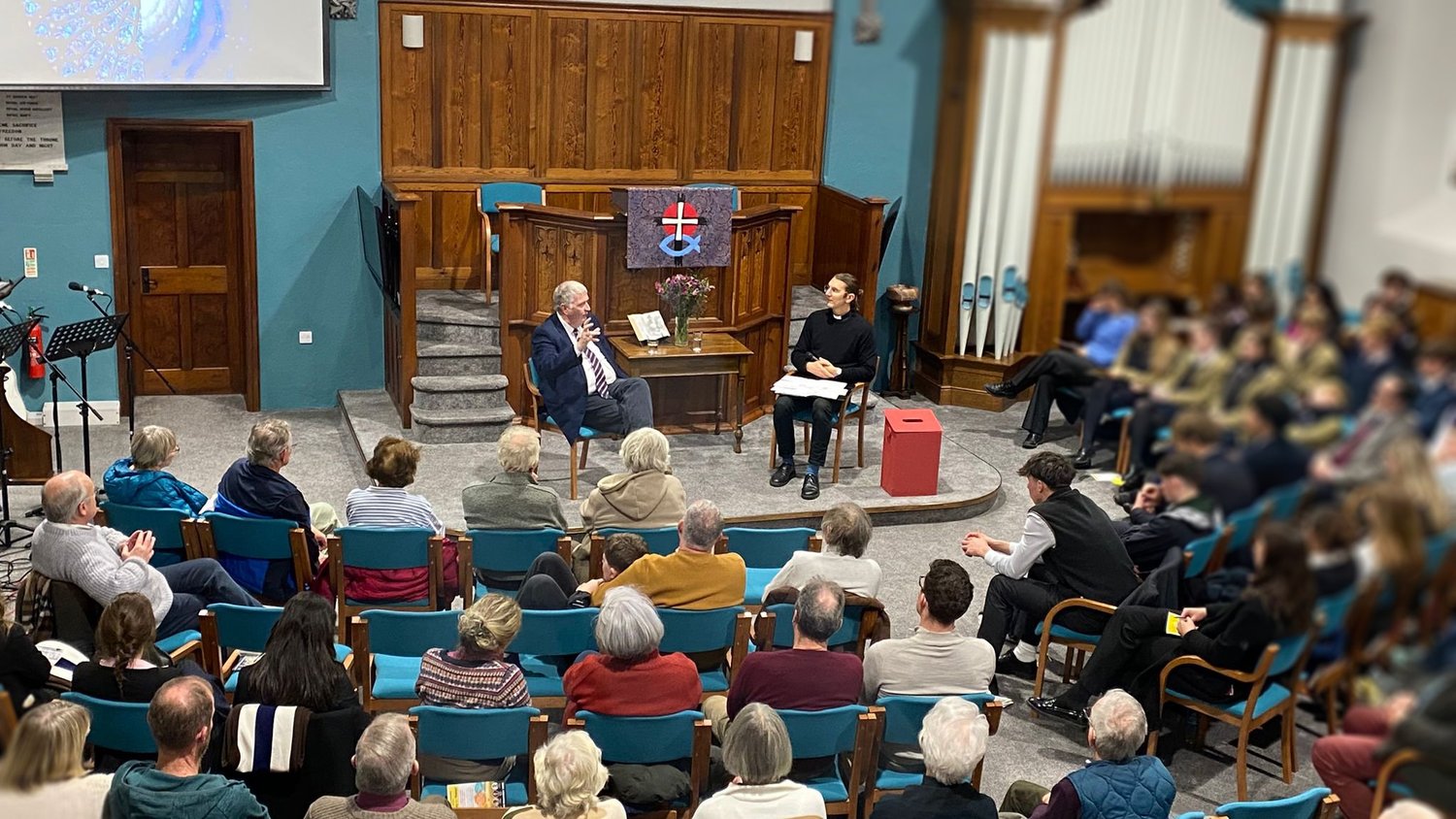
The question is not new.
He didn’t approach this as a theologian defending God against science, but as a scientist who has been continuously surprised by God.
We heard from Rev David that awe appears in science whenever someone realises the scale of what they’re looking at or when the evidence or outcome matches the hypothesis in either expected or unexpected ways:
- A hundred billion stars in our galaxy.
- A hundred billion galaxies beyond that.
- Light arriving from objects so distant that when we look out, we are literally looking back in time.
I loved it when he talked about the two scientific communities that normally refuse to speak to each other...the quantum (small) and the relativity (large), suddenly have to cooperate in the tiniest measurable moments after the Big Bang.
And how awe appears most of all in the mysteries we still can’t explain; dark matter and dark energy, the fine-tuning of the universe, the improbable conditions required for life to exist, the balance of forces so delicate that if even one of them were slightly different, we simply wouldn’t be here.
I was sat in this lecture nodding along, as were many others. We don’t possess all the answers. We can’t measure God or plot him on a graph. But we trust, not blindly, but on the basis of experience, prayer, scripture, community and those quiet inner moments when something in us says, “Yes… this is true.”
One of the most moving lines in the lecture was towards the end in the Q&A:
“To be clear, I speak as a Christian… and what I’ve found in the God who is Jesus Christ, without criticism of other faiths.”
It wasn’t triumphal or defensive, it was gently confident and rooted in experience, where he was open to dialogue, honest about the evidence and that of his own life.
Another thing I loved was a quiet refrain he used throughout the lecture:
“I do not buy that.”
It wasn't said dismissively or combatively but based, as a scientist, on the evidence as he observed it.
He mentioned in a moment of reflection, that for some of the numbers in Genesis to hold true, God would have to have made the world 'old'. God didn’t make the world old, to do so, God would be faking it, deceiving us, teasing us through scripture...’he didn't buy that’
It offered a model of faith that wasn’t anxious or protective, but inquisitive, hopeful, and humble, almost as if he was living Psalm 8 in real time standing under the night sky, tilting his head back and saying:
“Wow… look at that. And yet…”

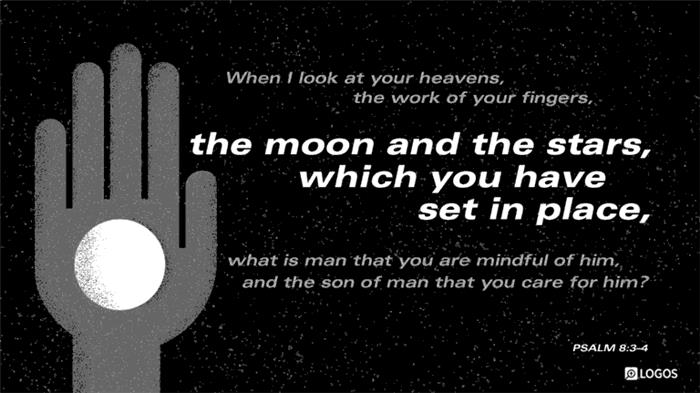
Psalm 8:3 (NRSVue): 3 When I look at your heavens, the work of your fingers,
the moon and the stars that you have established;
The psalmist isn't making a theological argument or presenting a doctrinal statement, or concluding a lecture, instead I think he is astonished. Psalm 8 is a holy gasp.
I think what might shock the psalmist is not the scale of the universe itself but the next line:
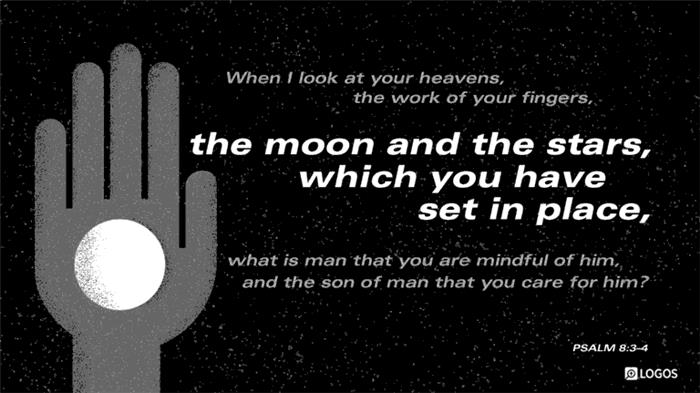
Psalm 8:4 (NRSVue): 4 what are humans that you are mindful of them,
mortals that you care for them?

Despite everything; the galaxies, the unimaginable distances, the beauty and violence and precision of the universe, God is mindful of us. Not humanity in the abstract, not “the world” or the universe as a concept, but us.
The psalmist looks up and realises, The One who made all this also knows who I am.
That is the awe filled, heart-stopping moment.


